The decision to open up a ground floor is one of the most consequential in residential renovation. It changes how a home feels, how light moves through the space, how a family lives day to day — and it cannot be undone cheaply.
Most guides cover layout ideas. This one covers the decisions that determine whether an open-plan space actually works: structural, material, light, and zone logic. All of it is drawn from Victoria, a completed whole-home ground-floor transformation in Liverpool, Merseyside.
This is where most homeowners start in the wrong order.
A load-bearing wall and a partition wall look identical until you open the ceiling. Load-bearing walls carry the floor or roof structure above them; partition walls simply divide space. Removing a load-bearing wall without the correct steelwork — a rolled steel joist (RSJ), a steel beam, or a flitch plate — will cause the structure above to move. That is a building control issue, not a design one.
Before briefing an interior designer, brief a structural engineer. They assess the load path, specify the steelwork, and produce calculations that Building Regulations require. In England and Wales, internal structural alterations require Building Regulations approval — not planning permission — unless the property is listed or in a conservation area.
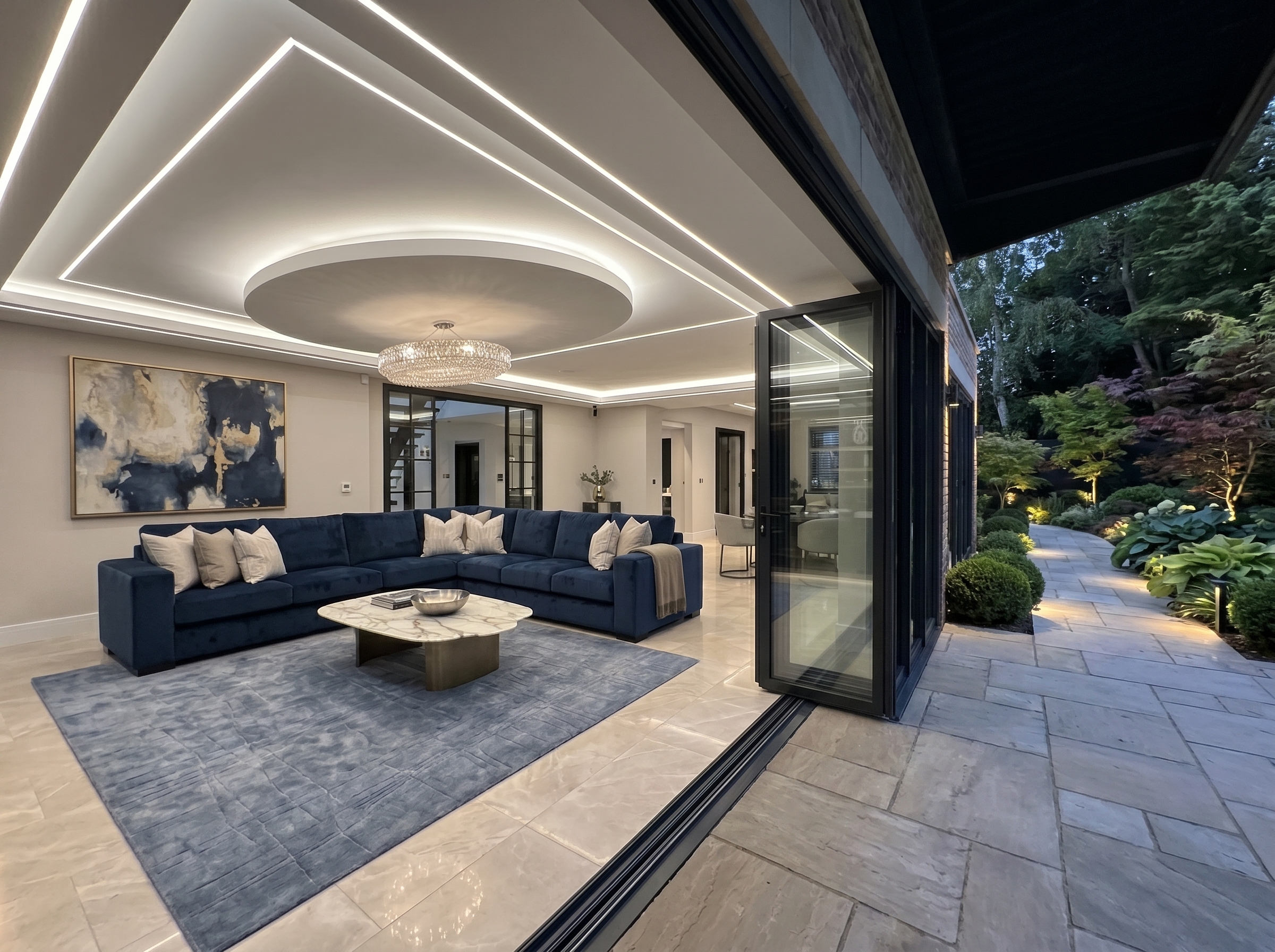
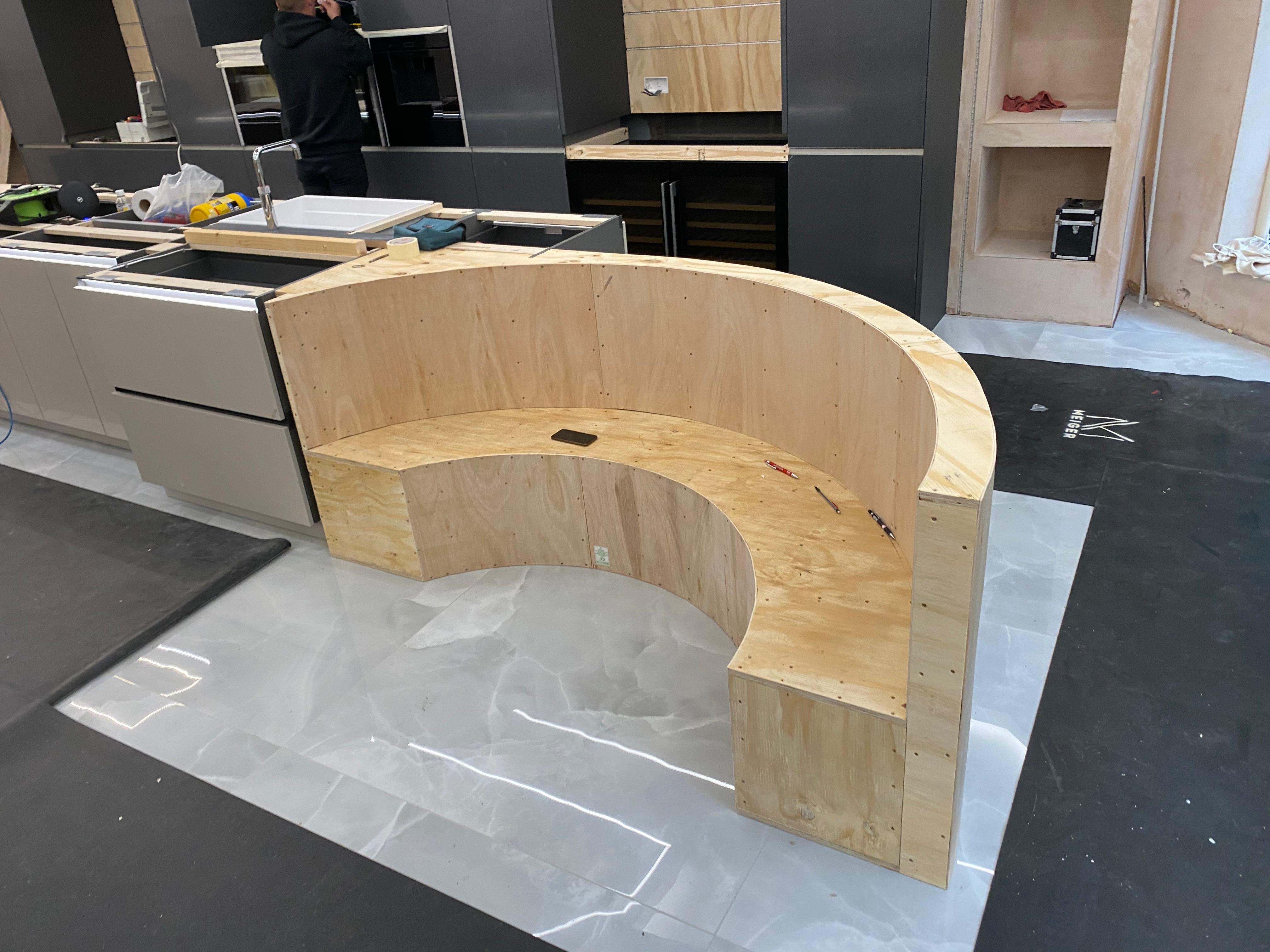
The structural decision also determines the ceiling. A beam can be left exposed, boxed out flush with the ceiling plane, or concealed within a designed recess. Each reads differently in the finished space. At Kirklake, the ceiling zone was resolved at structural stage — the recess became the primary lighting zone for the kitchen, with an integrated LED wash directed onto the worktop below. The feature reads as designed because the decision was made before construction began, not after.
Decisions that look aesthetic at this stage are almost always structural. Resolve them first.
Open-plan does not mean undivided. The spaces still need to function differently: a kitchen requires task-level lighting and a working perimeter; a dining zone requires a fixed point of focus; a living space requires something to sit towards. When walls come down, those distinctions are maintained by other means.
**Floor plane**: A continuous floor finish reads as one space. Where a material change is necessary, the transition should be designed — a 10mm metal inlay between stone and timber reads as considered; a plain butt joint does not.
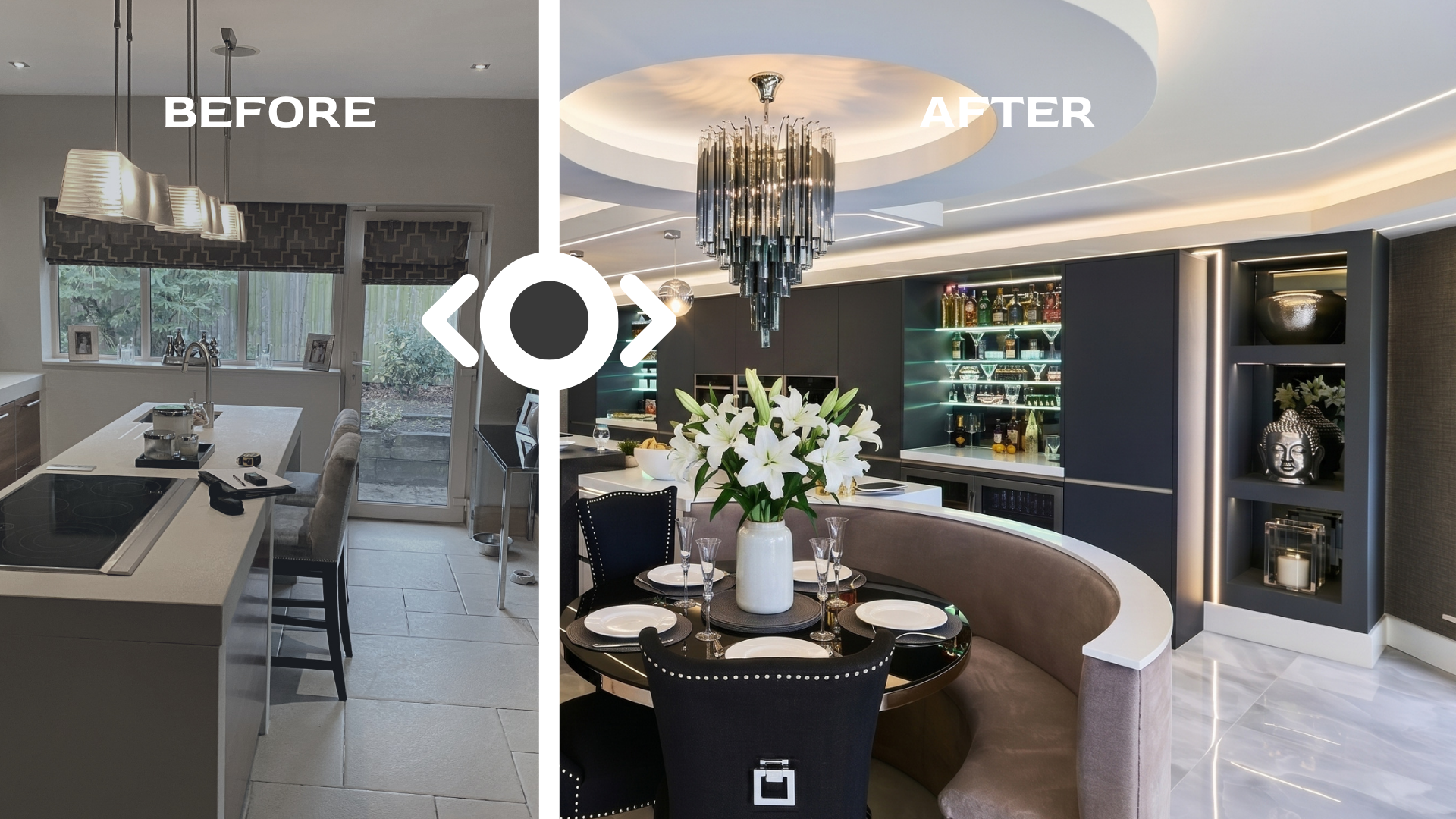
**Ceiling plane**: Where walls divided horizontally, ceilings can now define vertically. A designed ceiling recess, a lowered section, or a change in finish anchors one zone without interrupting the sightline across the space. At Kirklake, the kitchen sits beneath a bespoke ceiling recess; the living zone has a higher, cleaner plane. The shift is legible without a wall enforcing it.
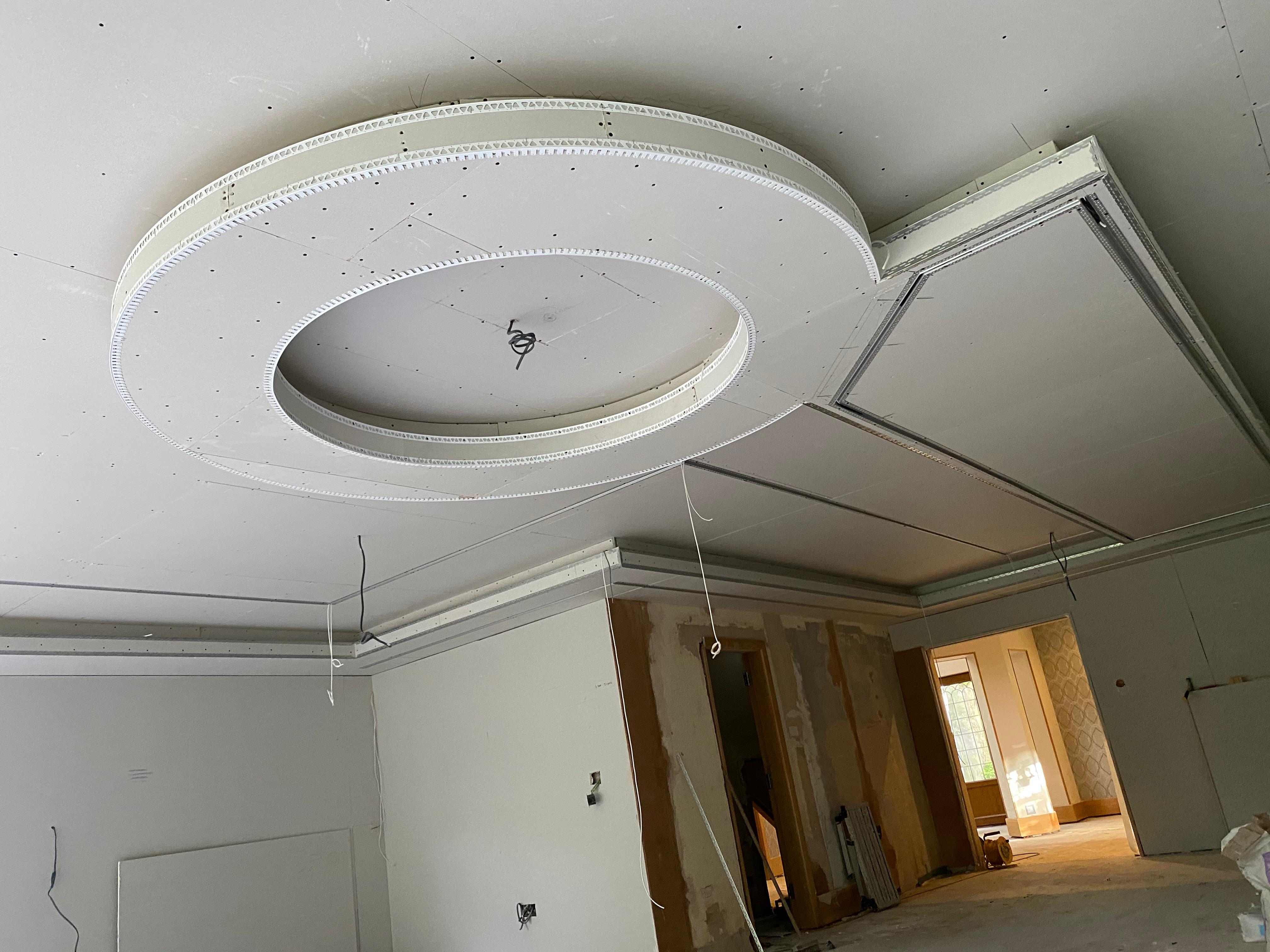
**Furniture**: Fixed seating reads as permanent and proportioned. The bespoke banquette at Kirklake is set against the perimeter of the dining zone — it anchors the space, keeps the central floor clear, and reads as architecture rather than loose furniture.
**Sightlines**: When a wall comes down, the eye travels further. The terminus matters. The far wall, a window, a considered material surface — the sightline should land somewhere deliberate.
Removing walls reduces the number of surfaces that bounce light. In a series of rooms, each room has four walls; in one open space, the internal surfaces are gone. Without intervention, the result is a space that feels larger but flatter.
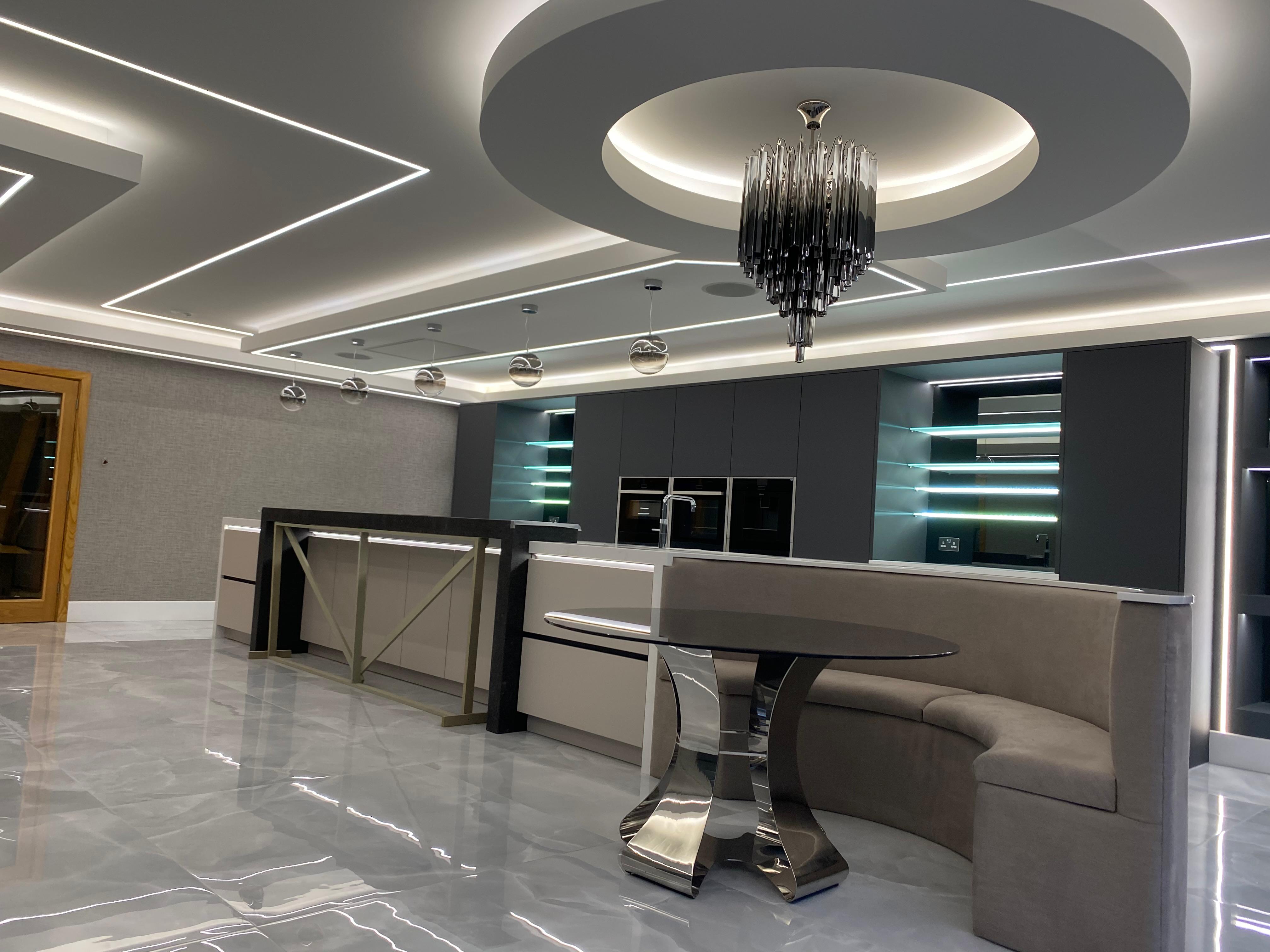
**One dominant source per zone**: Each zone within the open plan should have one identifiable primary light source. Kitchen: an integrated ceiling wash over the worktop. Dining: a pendant above the table. Living: a cove or perimeter wash. When all zones share one flat overhead grid, the spatial hierarchy dissolves.
Removing internal walls exposes more of the material envelope across a single continuous space. Materials that might have read as separate room characters now need to be coherent across the full span.
**One stone leads**: A single stone specification across the kitchen and any hard surfaces in the open plan creates visual continuity. At Kirklake, the kitchen worktop is honed marble at 40mm — the slab thickness reads as architecture, not just countertop. The honed finish means no glare, no fingerprint legibility, and a surface that shows grain rather than reflection.
**Joinery language is consistent**: If the kitchen cabinetry is flush-face with no visible fixings, the joinery in the dining or living zone follows the same logic. Mixed joinery languages — one door flush, one with shadow gaps, one with visible handles — read as separate decisions assembled, not one space composed.
**Floor runs through**: A single floor finish across the open plan is almost always stronger than a mixed one. The eye processes continuity as spaciousness.
**Limit the palette**: Two stones and two metals, maximum. More than that and the space competes with itself. Restraint is what allows individual elements — a worktop, a pendant, a threshold inlay — to read clearly.
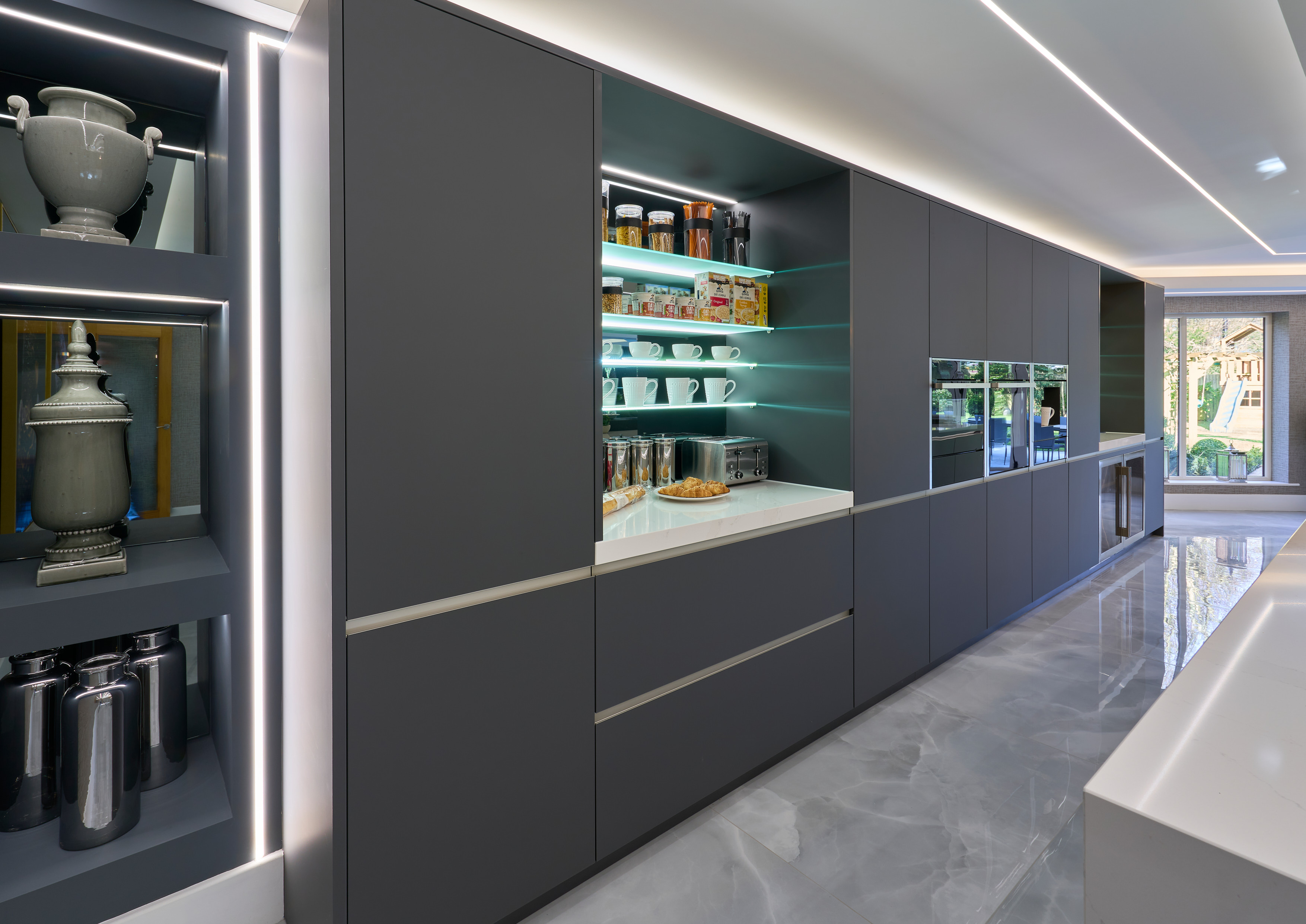
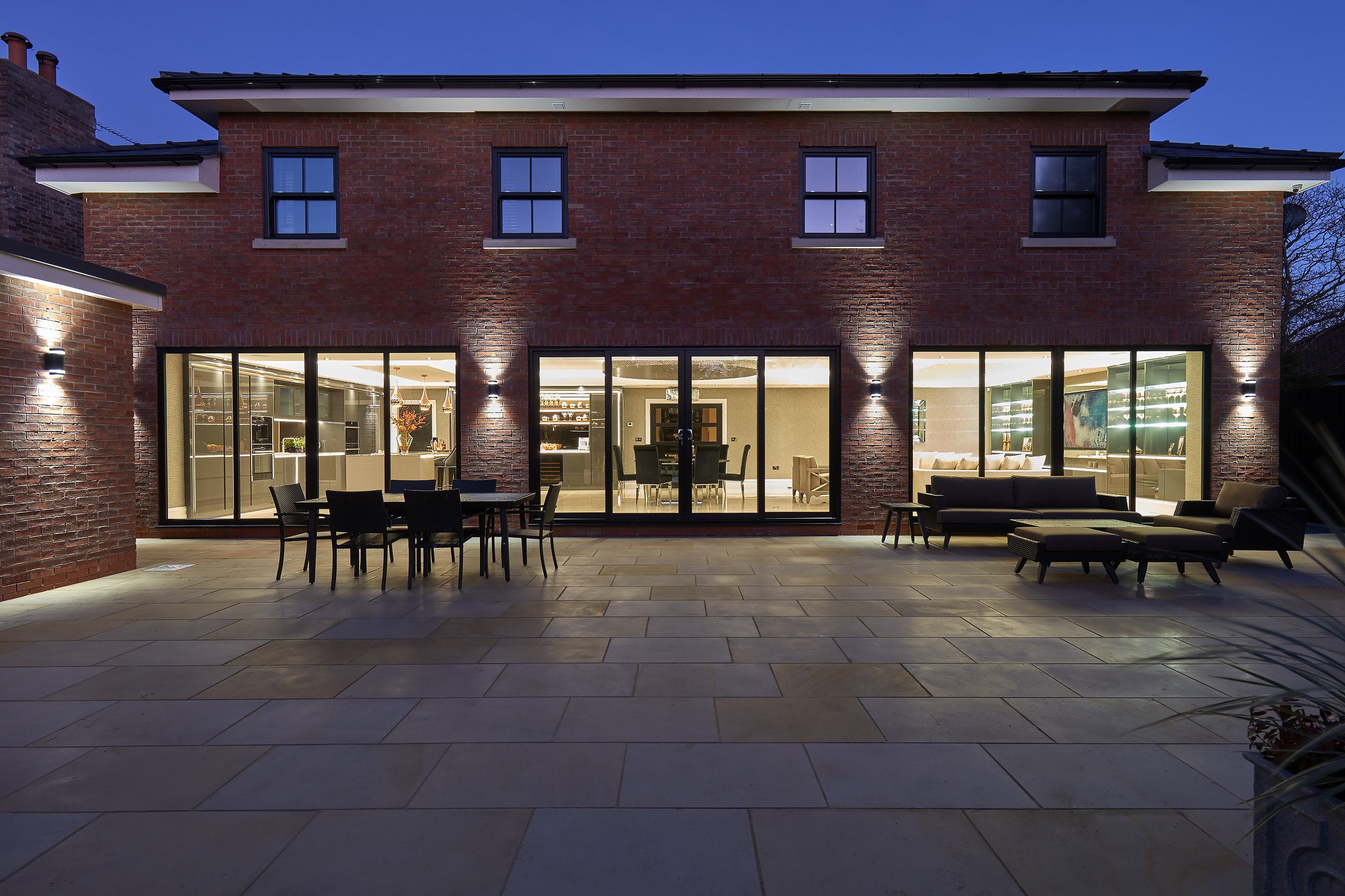
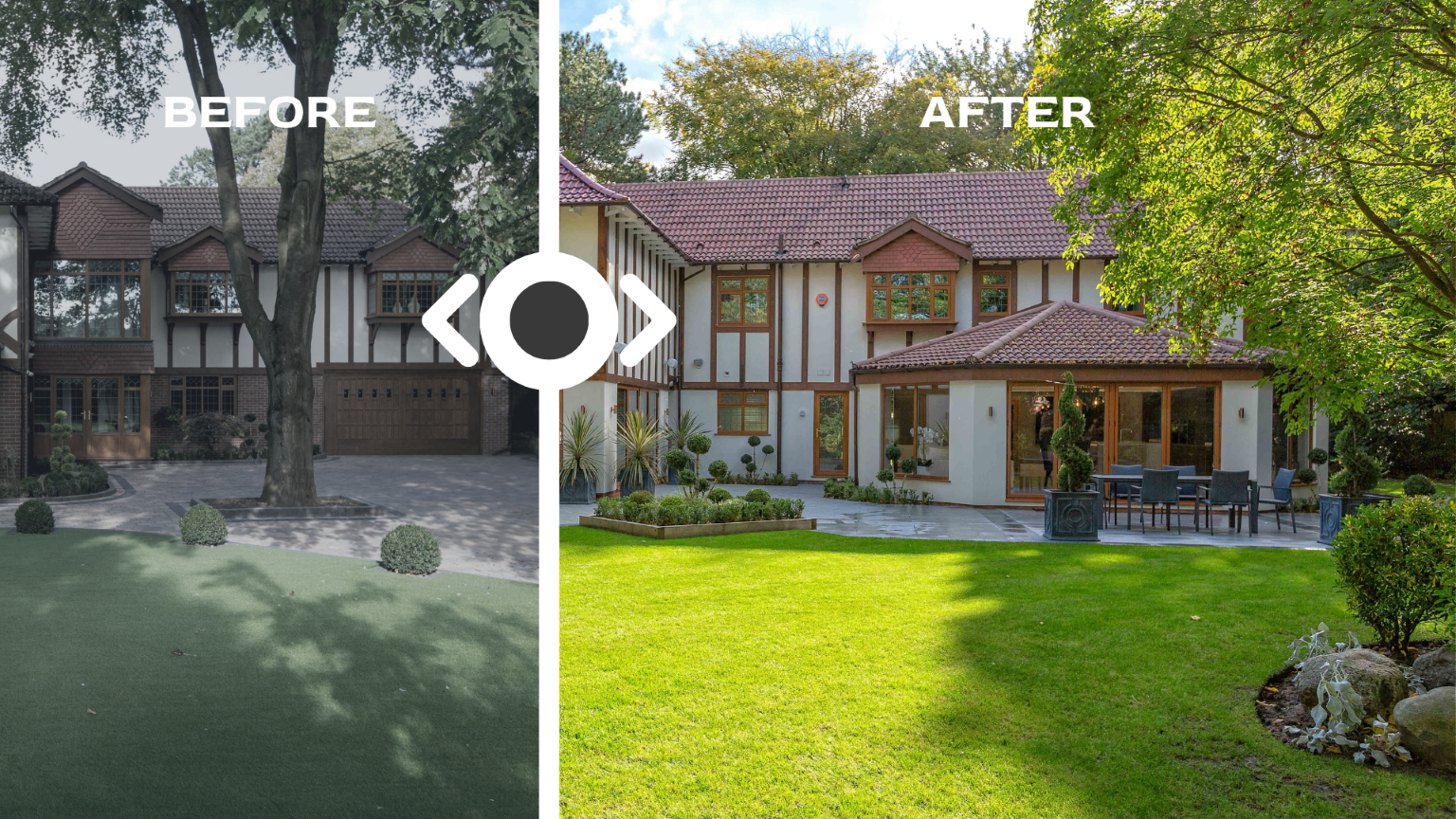
The brief at Victoria Road was a whole-home ground-floor transformation in Liverpool: connect the kitchen, dining, and living areas; resolve the ceiling plane; introduce bespoke joinery and fixed banquette seating; and bring the material specification up to the scale of the property.
The structural decision — what to remove and what to retain — was made before any interior design work began. The ceiling recess that now defines the kitchen zone was planned at structural stage; the recess, the steel, and the integrated lighting were coordinated as one decision, not three. That is why the finished ceiling reads as designed rather than retrofitted.
The project was documented from design concept through to completion.
To discuss a ground-floor renovation in Liverpool, Cheshire, or Manchester, contact the studio at hello@meiger.co.uk or on +44 (0)161 531 8385.
Or visit our latest project in HERE
Michael Moran is the founder and principal designer of Meiger, with a technical background rooted in architecture and building. His career began not at a drawing board but on site — developing a deep, hands-on understanding of how structures behave, how materials perform under construction conditions, and how the decisions made at building stage shape every interior that follows.
That technical foundation is what separates his approach. Where most designers work around a building’s constraints, Michael works from within them — reading the structure, understanding the load paths, and designing spaces that are architecturally coherent from the bones outward. His passion for precision and perfection drives every project: not as an aesthetic preference, but as a discipline embedded in how he thinks, how he specifies, and how he builds.
It is that same pursuit of perfection that brought him to luxury interior architecture — a discipline where technical rigour and refined design must occupy the same space, and where the standard is set not by trends, but by the integrity of every detail.
To learn more about Michael and the Meiger studio, visit our About page.