
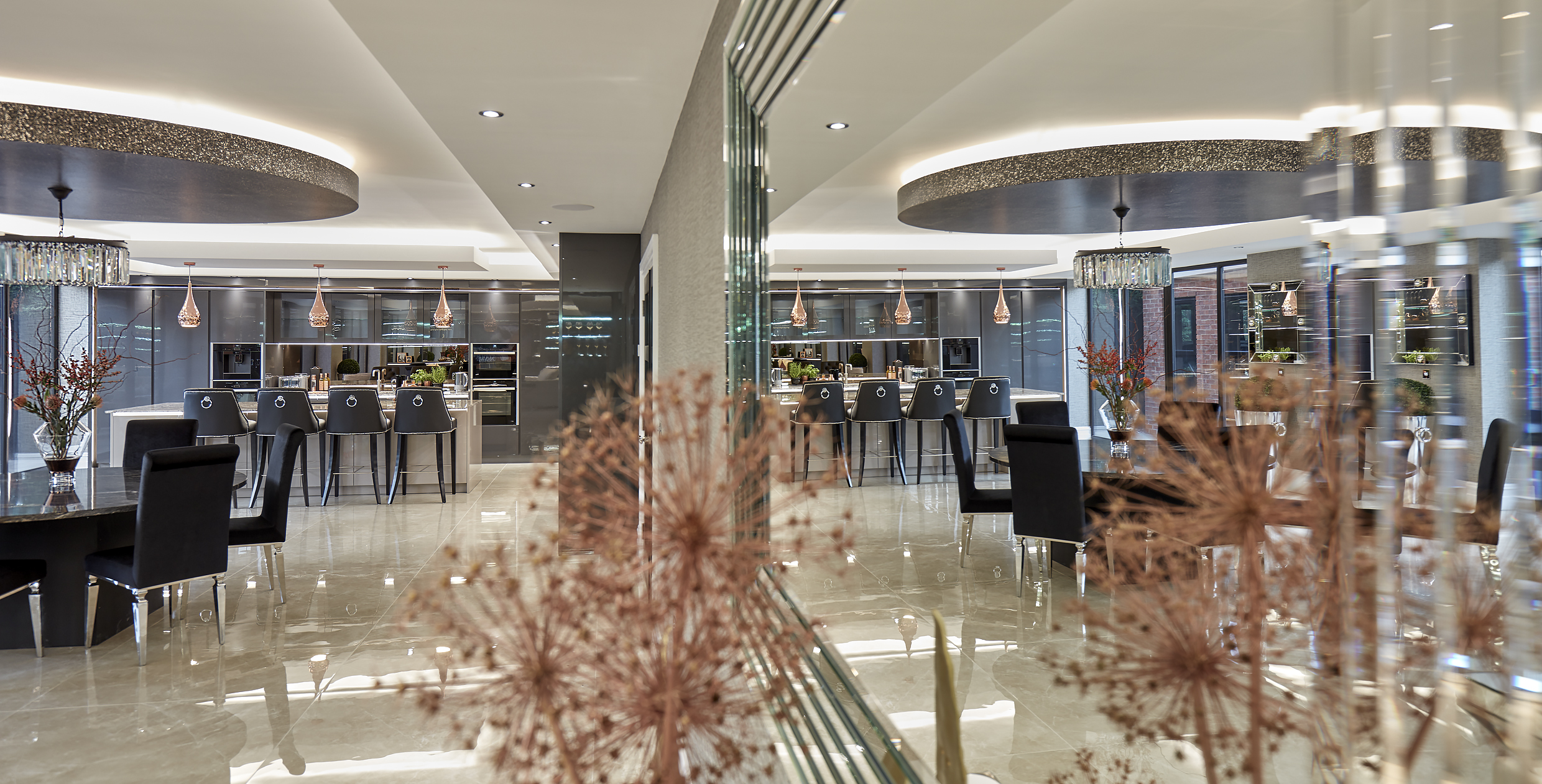
A timeless kitchen is not defined by one door style, colour or stone. It is a kitchen whose planning remains useful, whose construction can be maintained and whose more expressive layers can change without rebuilding the room.
That makes “timeless” a practical brief rather than an aesthetic promise. Layout, services, cabinetry and lighting should be resolved for the building and the household. Finishes and styling can then give the kitchen character without carrying all of its value.
Start with routines: how many people cook, where food arrives and is stored, whether the island is for preparation or gathering, and how the kitchen connects to breakfast, dining, lounge and garden spaces.
Clear circulation matters more than a fashionable plan. Routes to a terrace, utility room or dining table should not repeatedly cross the main cooking zone. Frequently used storage, preparation space, sink and appliances should form a logical sequence for the people who will use them.
The right answer may be open-plan, broken-plan or a kitchen with a closable preparation area. A timeless plan is specific to its household; it is not a copied formula.
Door colour is easy to notice, but cabinet structure, edge protection, hardware, internal fittings and installation determine how the kitchen feels in daily use.
Ask how carcasses and fronts will respond to moisture and heat, how heavy drawers are supported, whether hinges can be adjusted, and whether runners, lighting drivers and internal accessories can be accessed or replaced. Specify the internal arrangement as carefully as the elevations: trays, pans, small appliances, waste, cleaning items and food storage each need a realistic place.
Repairable and replaceable components are valuable. A kitchen is easier to maintain when a damaged front, hinge, drawer runner or lighting component can be serviced without dismantling an entire wall of joinery.
No worktop is “best” in every home. Natural stone, engineered surfaces, porcelain and ultra-compact materials differ in porosity, heat response, edge vulnerability, repairability, appearance and care requirements.
The decision should follow the cooking brief, desired finish and willingness to maintain it. Confirm the exact product, finish, slab layout, joints, support and edge details with the fabricator; a material name alone does not describe the completed installation.
Manufacturer information can help establish performance and care requirements. For example, Cosentino describes Dekton as having very low porosity and resistance to stains, abrasion and heat, while also publishing product-specific use and maintenance guidance. Those properties should still be considered alongside fabrication, edge design and the intended use of the kitchen.
Review Dekton worktop information from Cosentino.
Lighting should be designed with the cabinetry and ceiling, not added after the room is drawn. Combine task light at preparation areas with ambient light for dining and relaxation, and use accent lighting selectively for architecture, artwork or material texture.
At the same stage, coordinate extraction, replacement air, drainage, electrical loads, heating, cooling, data and appliance ventilation. Early coordination prevents visible compromises and allows access for future maintenance.
Premium appliances do not create a better kitchen when their capacities, positions or controls do not match the household. Decide what is genuinely needed across refrigeration, ovens, hobs, extraction, dishwashing, coffee, wine storage and small appliances.
Allow for doors, handles, loading space, ventilation and servicing. Where appliances are integrated, the surrounding joinery should permit replacement when models change. The long-lived part of the kitchen should not depend on one appliance remaining available forever.
The architecture, main circulation, service positions and core cabinetry are costly to alter. Paint colours, stools, pendants, decorative objects and some door or handle finishes are easier to refresh.
This distinction allows a kitchen to be distinctive without making every feature permanent. Strong proportions and disciplined material transitions can support expressive stone, metal or colour while keeping the room coherent with the rest of the home.
Request care information for worktops, timber, lacquer, metal finishes, floors and appliances before final specification. The client should understand what can stain, scratch, patinate or require sealing, and which cleaning products or temperatures the manufacturer excludes.
A useful handover records product names, finishes, suppliers, warranties, spare components and care instructions. Photograph concealed service routes and retain coordinated drawings. This information makes future maintenance and alteration more accurate.
Victoria Neo-Classical House is a 400 m² residential project on Victoria Road, Cheshire, completed in 2021. Meiger’s published project record documents a bespoke kitchen, a designed ceiling composition, improved connection to the outdoors, an outdoor kitchen and a private gym within the transformation of a traditional residence.
The project is useful here as an example of integrated planning: kitchen, ceiling, lighting, family space and outdoor connection were treated as parts of one architectural interior. It is not presented as evidence of a five-year condition survey; that would require a dated revisit and documented maintenance record.
Before approving the design, confirm that:
No. Colour, expressive stone and crafted metalwork can endure when they belong to the architecture and the client’s preferences. Neutrality does not correct a weak layout or poor construction.
Not automatically. Natural materials may develop patina and variation, while engineered products may offer more consistent performance or lower maintenance. The appropriate choice depends on use, appearance, care and the detail of the installation.
Develop them together. Cabinetry, task areas, ceiling geometry, daylight, pendants, extraction and electrical services affect one another. Coordinating them early produces a calmer result and reduces changes during construction.
Use serviceable hardware, accessible lighting components, replaceable appliances and joinery that does not depend on one discontinued model. Keep records of finishes, suppliers and concealed services, and use decorative layers for changes that do not require rebuilding the room.
Meiger designs kitchens as architectural interiors, coordinating the kitchen with breakfast, dining, lounge and outdoor spaces where the brief requires it. Explore our bespoke kitchen design service, view luxury kitchen projects, or start a conversation with the studio.


