

Every April, the global design industry pauses for Milan. The 64th edition of Salone del Mobile, held from 21 to 26 April 2026 at Fiera Milano, brought together more than 1,900 exhibitors from 32 countries under a single theme: A Matter of Salone — a deliberate return to material as the origin of every design decision.
For a contemporary studio working across Cheshire and Manchester, Milan is not a trend-spotting exercise. It's where the conversations that will shape the next two to three years of luxury interiors are having their first public airing. This year's fair made several of those conversations unusually clear.
Below is our studio edit — the directions that matter, why they matter, and how we're already translating them into current Meiger projects.

The headline theme of Salone 2026 was deliberate. A Matter of Salone reframed the fair around material as the starting point rather than the finish — visible grain, tactile stone, textiles that celebrate imperfection, joinery that reveals rather than conceals.
It's a direction high-end European design has been moving toward for several years, and one we already work in. What changed this year is that the fair itself has put material honesty at the centre of the industry's conversation. Marble, travertine and limestone were presented as architectural elements with bold veining and sculptural volumes — not applied as finish but used to define space. Japanese-inspired joinery without visible hardware appeared across multiple stands.
For our Cheshire projects, this reinforces a principle we've specified toward for some time: materials should be selected for how they will age, how they catch light, and how they reward close inspection ten years on — not how they photograph on day one.
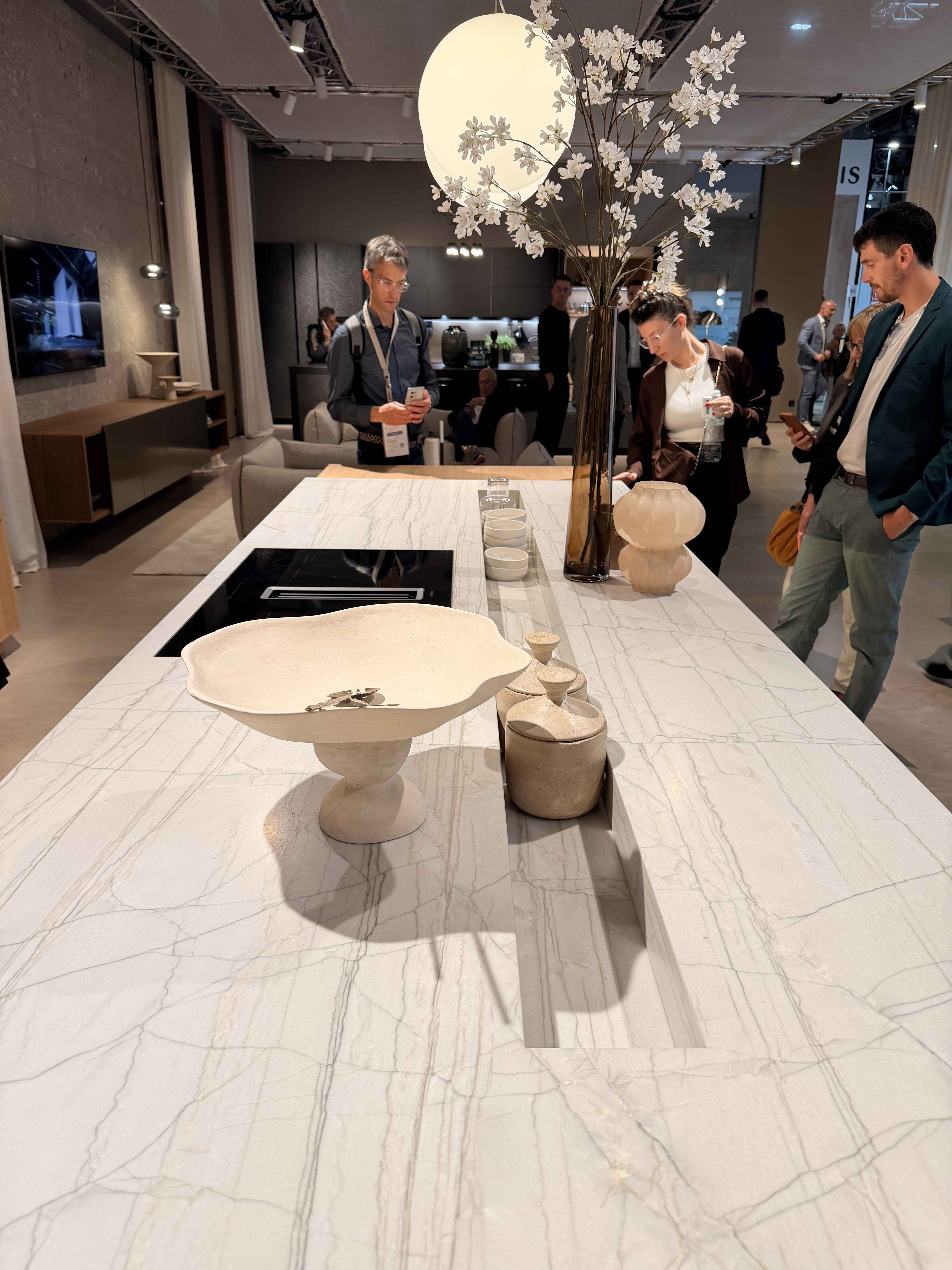
One of the clearest shifts of 2026 is the near-total disappearance of visible technology in high-end furniture. Induction hobs that vanish into stone. Surfaces that respond to a hand passing over them. Upholstery that subtly adjusts ergonomic support based on posture. No screens. No buttons. No visible integration.
The Brera Design District theme Connected Worlds framed this directly: digital connectivity as something that enables physical experience rather than replacing it. The result is what the industry is beginning to call responsive minimalism — intelligence embedded in material rather than applied as a device.
For our projects, this is the most immediately actionable trend of the fair. We're already specifying hidden integrations across current briefs — kitchen work-surface technology, concealed extraction, lighting controls that read the room rather than demanding a panel. The goal is a home that performs at the highest level without ever looking like it's trying to.
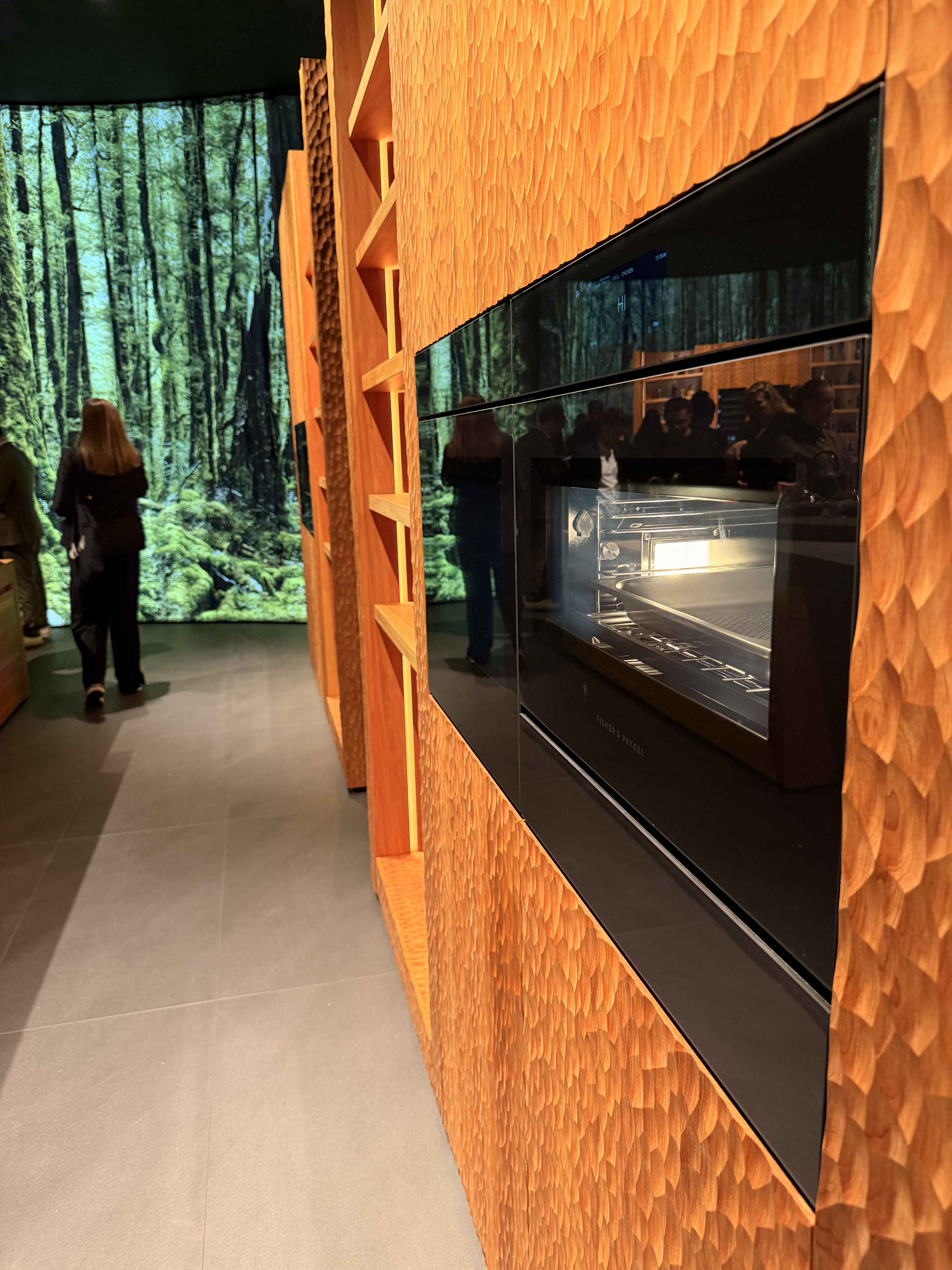
EuroCucina 2026 — the biennial kitchen showcase held within Salone — confirmed what has been emerging for several years: the kitchen is no longer a room.
Integrated appliances, vanishing extraction, continuous surface work and handleless cabinetry are dissolving the boundary between cooking and living. At the fair, leading Italian and European brands presented kitchens that read as part of the architecture rather than a functional insertion into it. Biophilic materials, AI-led configuration tools and hospitality-grade engineering are now standard at the top of the market.
This is one of the most technically demanding directions to execute well. A kitchen that disappears into a living space requires architectural planning from day one — not a kitchen specification dropped into an existing floor plan. It's a brief we're developing across two current Cheshire projects, and one that depends entirely on resolving the layout before a single material is chosen.
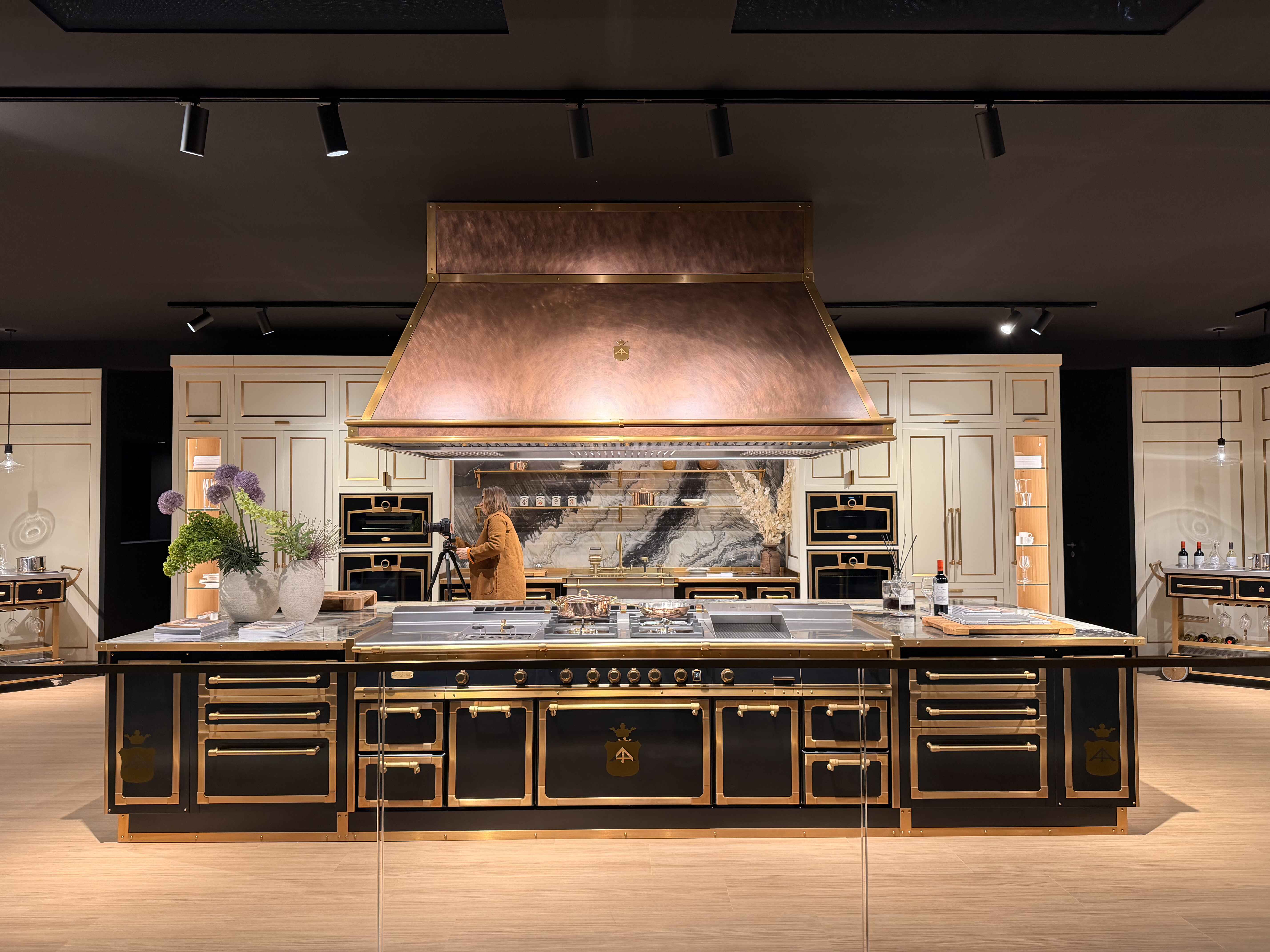
Lighting at Salone 2026 was no longer presented as decoration. The strongest work across the fair treated light as architectural infrastructure — integrated cove detailing, backlit joinery, adaptive fixtures that shift intensity and temperature across the day in line with circadian rhythm.
Castro Lighting's The Art of Brass installation and numerous stands across the lighting halls showed fixtures designed to perform as material rather than ornament. The fixture itself may be sculptural, but the primary role of light is now structural: it shapes mood, defines hierarchy, and calibrates how a room feels at different hours.
We've specified toward integrated and layered lighting schemes for several years, and this direction at the fair reinforces the case for getting lighting onto the drawing board at architectural stage, not retrofitted at second fix. In our experience, the single biggest difference between a good high-end interior and an exceptional one is how seriously the lighting was taken at the beginning of the process.
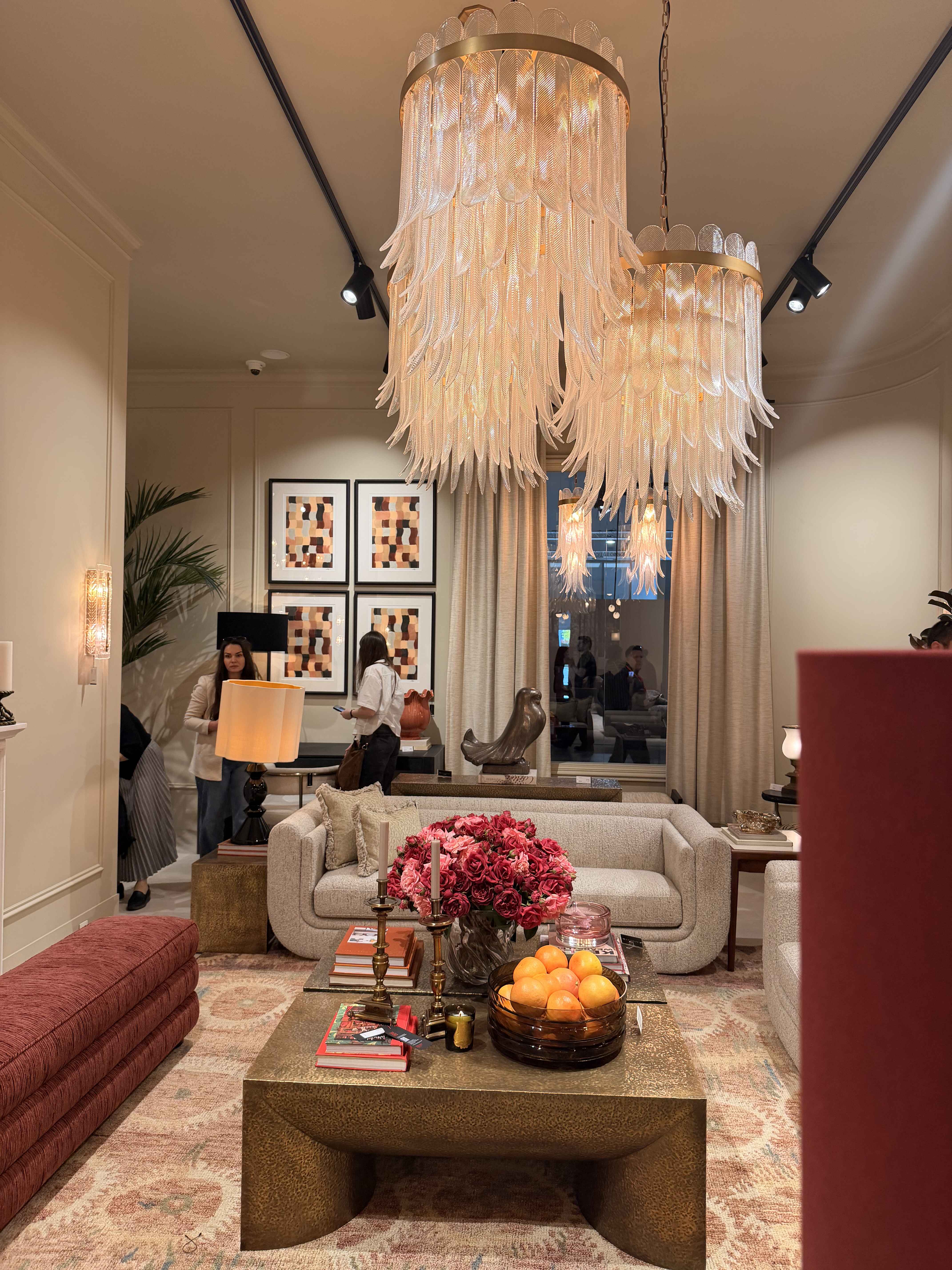
A quieter but significant shift: furniture at the fair was scaled and proportioned to perform architectural roles. Sofas as modular landscapes. Shelving systems as partition walls. Tables at near-monumental scale.
This is a direct response to how people now live — open-plan homes, hybrid working, and spaces that need to define function without being closed off. A single sculptural sofa can anchor a living zone within a larger open space. A freestanding shelving system can create separation without losing light.
For our Cheshire and Manchester clients — many of whom are building or reconfiguring larger homes with open-plan living at the core of the brief — this is a practical direction. We're increasingly specifying fewer, larger, more sculptural pieces rather than multiple smaller ones. The result is a calmer, more architectural interior with clearer spatial intent.

The through-line across every direction at Salone del Mobile 2026 is craftsmanship. Material honesty, invisible technology, architectural lighting, collectible pieces — all of them depend on the same underlying commitment: work made properly, by makers who know what they're doing, to standards that hold up to close inspection.
This is how we think about every Meiger project. Our role as a studio is not to specify from a catalogue. It is to assemble a team of makers — joiners, stone specialists, lighting engineers, upholsterers, metal fabricators — whose individual craft contributes to a single coherent interior. Milan confirmed that the best work in the world is being made this way. It's how we define our design philosophy from the very beginings
Several new collaborations with European and British suppliers are now in motion following this year's fair. They will appear quietly across projects completing through late 2026 and into 2027.
If you're planning a home in Cheshire, Manchester, or the wider North West and want to discuss any of these directions, we'd be glad to talk. Meiger works on a small number of contemporary luxury interior projects each year and takes on new briefs by conversation.
Start a conversation with us →


